How it works
orch sits between your tools and the two coding agents. Everything runs on your machine, using the Claude Code and Codex subscriptions you already have.
Architecture
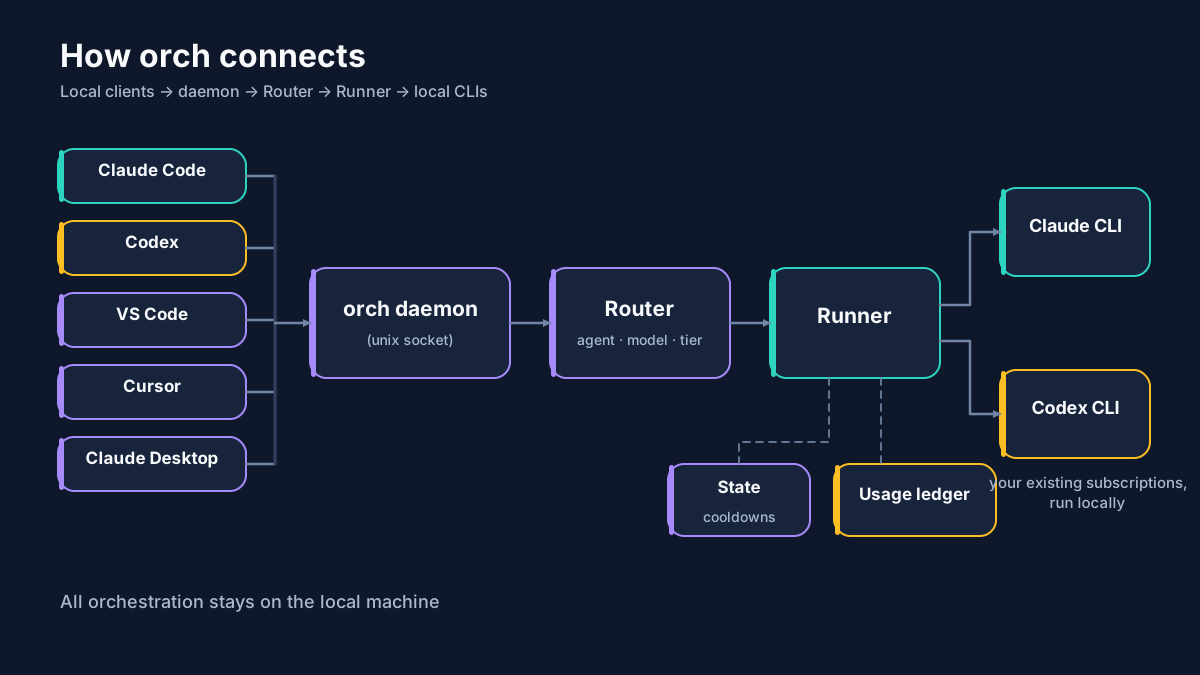
Any client (the terminal, Claude Code, Codex, VS Code, Cursor, Claude Desktop) sends the task to one local daemon. The router picks the agent, model and tier from the prompt and your rules. The runner starts the real claude or codex command. State remembers cooldowns and the usage ledger records tokens, so orch usage can show what each agent, model and role cost.
Failover
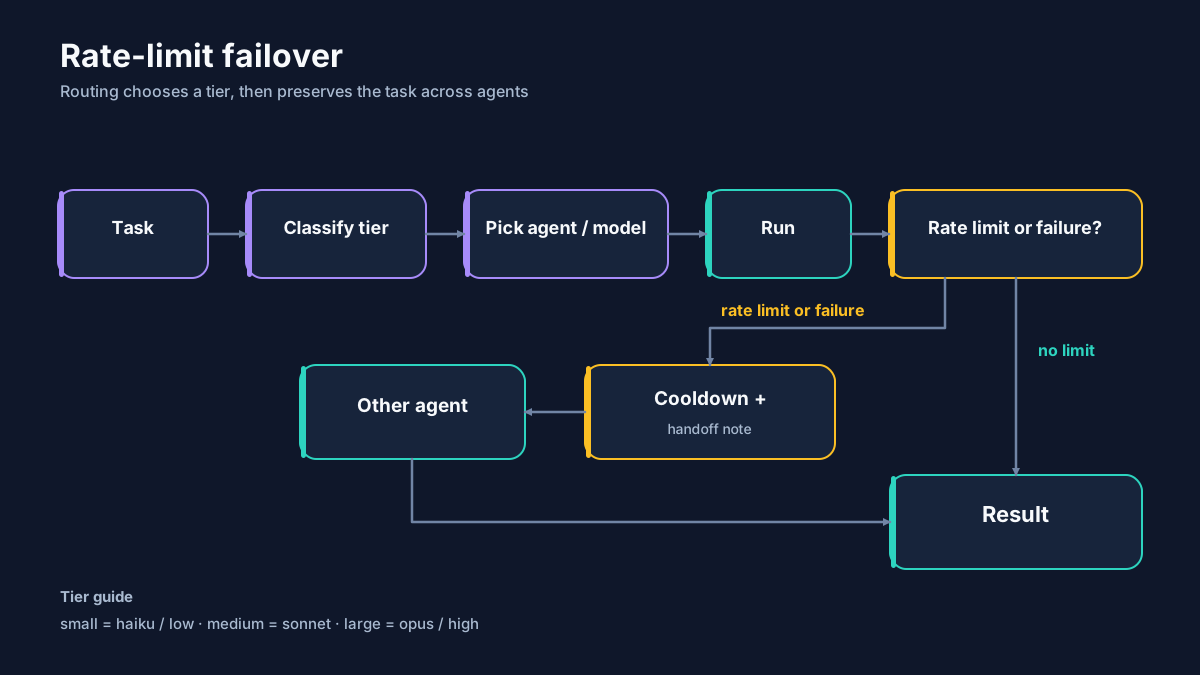
When an agent hits a rate limit or fails, orch records a cooldown (using the reset time the agent reports), builds a handoff from the original prompt, your git diff and a short summary, and finishes the task on the other agent. With --only it does not fail over and tells you instead.
Roles and teams
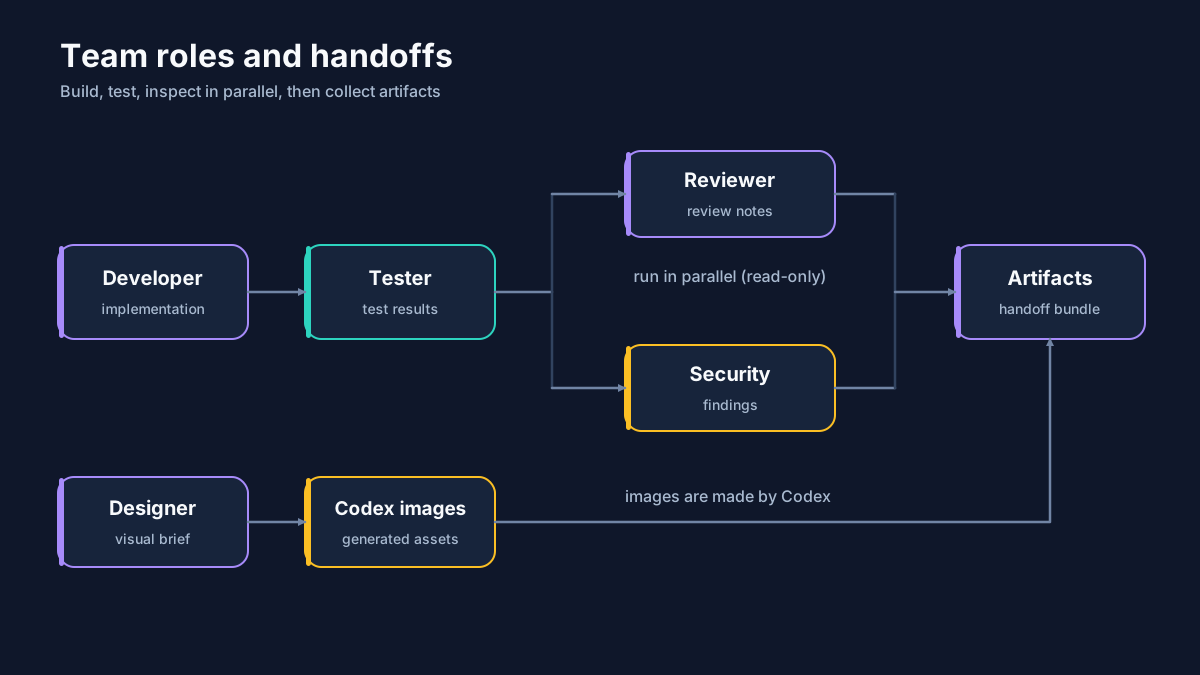
A team runs roles in order and passes a short handoff from each to the next. Adjacent read-only roles (reviewer, security) run in parallel, which saves time but not tokens. The designer role needs Codex because only Codex can make images. See Roles.